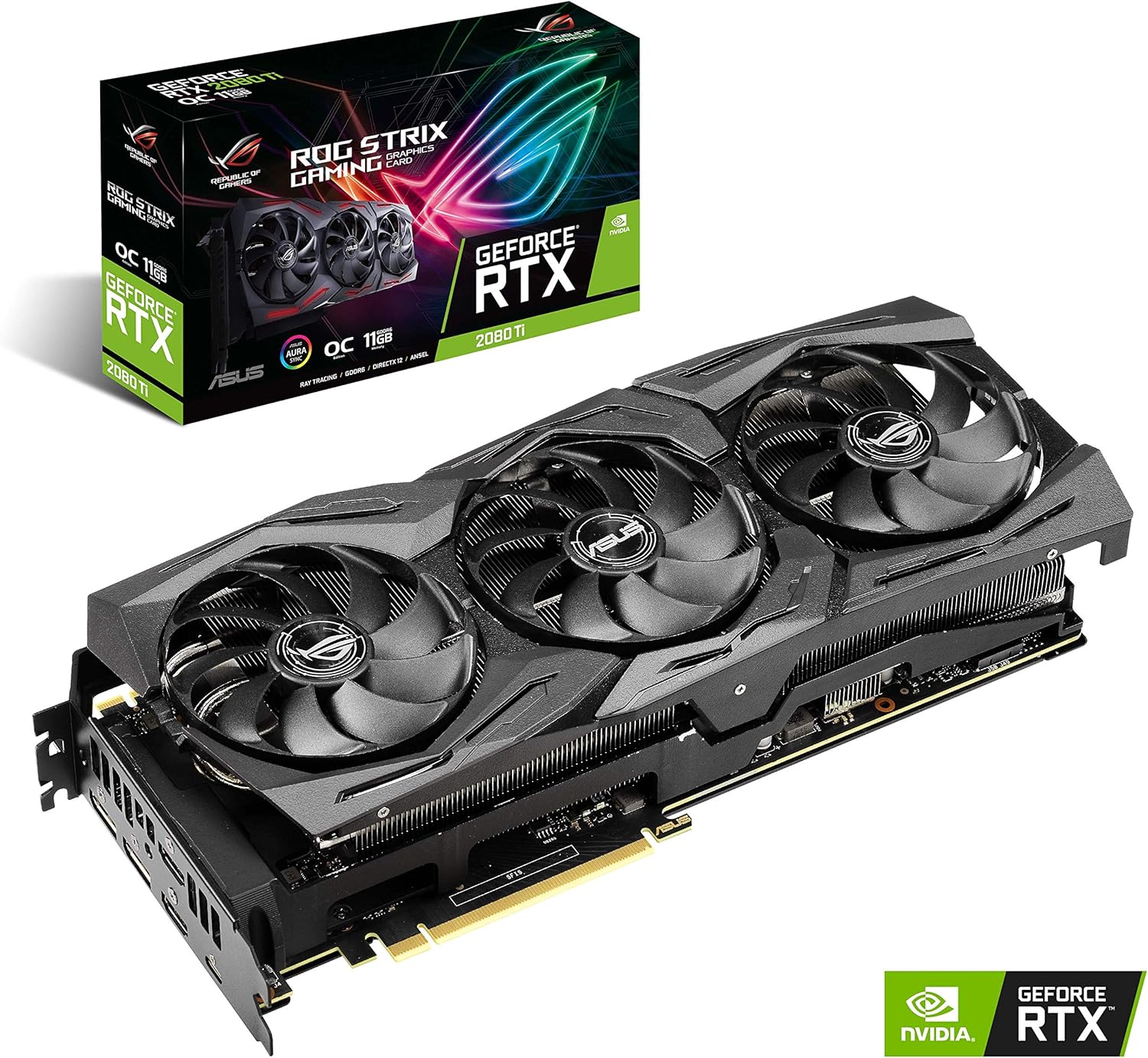
Though it costs almost twice as much as the graphics card its replacing, the Nvidia GeForce RTX 2080 Ti does deliver some breathtaking specs with 11GB of GDDR6 VRAM, 4,352 CUDA cores and a boost clock of 1,635MHz. It’s all thanks to Nvidia’s first ever self-implemented 90MHz factory overclock. Comparatively, the Nvidia GeForce GTX 1080 Ti sports 11GB of last-generation GDDR5X VRAM, 3,584 CUDA cores and a 1,582MHz maximum frequency. This GPU also features two additional types of cores its predecessors never had, in the form of RT and Tensor cores. The RTX 2080’s Ti’s 68 RT Cores power ray tracing, which allows this graphics card to render much more complex, real-time lighting scenarios and natural shadows than the 1080 Ti ever could.In the meantime, 544 Tensor Cores bring artificial intelligence (AI) into the mix, which Nvidia hopes to use for more efficient anti-aliasing. According to Nvidia, Turing is eight times faster at processing anti-aliasing than Pascal via machine learning. Additionally, Tensor Cores drive a new technology called Deep Learning Super Sampling, which can increase resolution while applying anti-aliasing at the same time.
 Bemnet's Weekly Tech Blog